
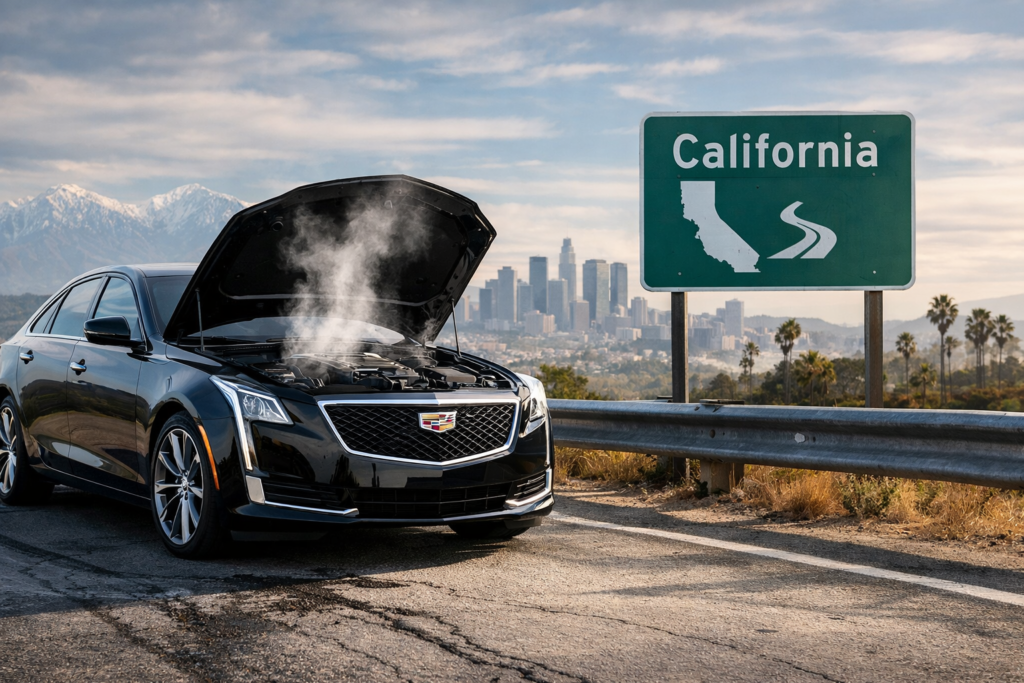
Cadillac lemon law California becomes relevant when you invest in a Cadillac expecting a premium, luxury experience. You paid for superior performance, next-gen technology, and the peace of mind that comes with a high-end American brand. Instead, you have been dealing with persistent Cadillac engine problems, a faulty transmission, and endless trips to the service center.
This is a frustrating and disappointing reality for many Cadillac owners. Whether you’re driving an Escalade, a CT5, or an XT6, a serious defect can turn your dream car into a nightmare. You feel let down by the brand and stuck with a vehicle that does not live up to its name or its price tag.
When your luxury vehicle spends more time in the shop than on the road, you have a serious problem. You need to know that you have serious rights. The California’s lemon law provides a powerful legal remedy for consumers who have been sold a defective vehicle. You may be entitled to a full Cadillac buyback in California, forcing the manufacturer to take back your lemon and return your money.
This article will explore the common issues that plague Cadillac vehicles, how the lemon law applies, and why you need an experienced lemon law lawyer to take on a corporate giant like General Motors.
A Pattern of Problems: GM and Cadillac
Cadillac is the luxury division of General Motors (GM), but the premium price tag does not guarantee immunity from widespread manufacturing defects. These are not isolated incidents but part of a larger pattern of quality control failures that affect the entire GM family.
Government investigations often reveal the true scale of these issues. For instance, in a report from The Autopian detailing an official NHTSA probe, a GM investigation uncovered a staggering 28,102 complaints related to the failure of a single type of V8 engine used in many of its trucks and SUVs. This data, sourced from federal regulators, proves that thousands of owners face serious, systemic problems.
As a GM brand, Cadillac is part of this reality. The same engines, transmissions, and electronic components are often shared across brands. When you’re dealing with a persistent issue in your Cadillac, you’re not just one unlucky owner; you’re experiencing a symptom of a much larger problem.
Common Defects in Cadillac Lemon Law Cases
Certain substantial defects appear frequently in Cadillac lemon law claims. If you’re experiencing any of these issues, you may have a strong case.
CUE Infotainment System Failures
The Cadillac User Experience (CUE) system is the central hub of the vehicle, controlling navigation, audio, and climate. It’s also a notorious source of problems. Owners report screens freezing, going blank (delamination), becoming unresponsive to touch, and randomly rebooting. This can be a major distraction and safety hazard.
Transmission Issues
Many Cadillac models with 8-speed and 10-speed automatic transmissions are known for shuddering, jerking, and hard shifting. This problem, sometimes related to the infamous “Chevy Shake,” can make the vehicle feel unsafe and unreliable. Dealers may attempt temporary fixes, but the underlying problem often remains.
Cadillac Engine Problems Lemon Law
Engine defects are a serious safety concern and a common complaint among Cadillac owners. This can include issues with lifters, camshafts, timing chains, and excessive oil consumption. A check engine light that the dealer can’t seem to fix is a major red flag that you may have a lemon.
Electrical System Malfunctions
Beyond the CUE system, Cadillacs can be plagued by other electrical gremlins. This includes faulty sensors, malfunctioning power liftgates, and battery drain issues that can leave you stranded. These problems are often difficult for dealers to diagnose and repair, leading to repeated service visits.
Your Rights Under the Cadillac Lemon Law in California
California’s lemon law is one of the strongest in the country. It states that if a manufacturer can’t repair a substantial, warrantied defect after a reasonable number of attempts, they must either replace the vehicle or buy it back.
What is a “Reasonable” Number of Attempts?
The law provides guidelines. Your vehicle may be presumed a lemon if, within the first 18 months or 18,000 miles:
- The same problem has been repaired four or more times (or two or more times if it’s a serious safety defect).
- The vehicle has been out of service for a total of more than 30 days.
Even if you don’t meet these exact numbers, you can still have a valid claim. The ultimate standard is what is “reasonable” under the circumstances.
The Remedy for a Cadillac Buyback, California
If your Cadillac is a lemon, you’re entitled to a repurchase. This means GM must refund your down payment, all of your monthly payments, and pay off the remaining balance of your auto loan. They take the car back, and you get your money back. It’s a complete reset.
Why You Need an Expert to Fight GM
General Motors is a massive corporation with a powerful legal team. They will not simply hand you a check because you ask for it. They will try to deny, delay, and underpay your claim. To win, you need an expert who knows how to beat them at their own game.
Leveling the Playing Field
An experienced Cadillac lemon law attorney understands GM’s legal playbook. They have handled hundreds of cases against them and know how to counter their arguments. They level the playing field and ensure your rights are protected.
No Upfront Cost to You
California’s lemon law has a fee-shifting provision. This means that when you win your case, GM is legally required to pay your Cadillac lemon attorney’s fees and costs. You get expert representation without any out-of-pocket expense. There is no financial risk to you.
Stop Accepting a Subpar Luxury Experience
You paid for a Cadillac, and you deserve the quality and reliability that name promises. You don’t have to accept a vehicle that is constantly in the shop. The Cadillac lemon law in California gives you the power to fight back.
If you’re tired of dealing with a defective Cadillac, it’s time to take the first step. A free consultation with a lemon law expert can determine if you have a case. Our team of experts will review your repair history and explain your legal options.
Don’t let GM get away with selling you a lemon. Use the law to your advantage and get the compensation you’re entitled to.
Ready to hold Cadillac and GM accountable?
Schedule your free, no-obligation case evaluation now
Frequently Asked Questions
Does the lemon law apply to leased Cadillacs?
Yes. The California lemon law provides the same protections for leased vehicles as it does for purchased vehicles. If your leased Cadillac is a lemon, you’re entitled to have the manufacturer buy it back.
What if my Cadillac is a Certified Pre-Owned (CPO) vehicle?
You’re still protected. The lemon law applies to any vehicle repaired under a manufacturer’s warranty, which includes a Cadillac CPO warranty. If you have had repeated repair attempts for a defect covered by your CPO warranty, you may have a claim.
Will filing a claim affect my credit score?
No. A lemon law claim is a legal action against the manufacturer to enforce your warranty rights. It’s not a debt or a default, and it’s not reported to credit agencies. Your credit score will not be affected.
What should I do if the dealer tells me the problem is “normal” for my Cadillac?
This is a common tactic used to discourage consumers from pursuing a claim. If a problem substantially impairs your vehicle’s use, value, or safety, it’s not “normal.” You should always get this response in writing on the repair order and then contact a lemon law attorney.
Can I handle a claim against Cadillac myself?
While you technically can, it’s not recommended. GM’s legal team is skilled at defeating individual claims. An experienced Cadillac lemon attorney knows their tactics and can significantly increase your chances of winning and maximizing your settlement. With the manufacturer paying your legal fees, there is no reason to go it alone.